Challenge #6: Habitat Loss
Habitat loss in South Africa’s Garden Route, part of the Cape Floristic Region and Indian Ocean Coastal Belt biomes, drives significant biodiversity decline through fragmentation, reduced ecosystem services, and species extinctions. Urbanization, agriculture, and plantation forestry intensify these effects, transforming mesic habitats faster than arid ones.
Key Drivers
Expansion of croplands, human settlements, and plantations clears natural vegetation, with the Fynbos and Indian Ocean Coastal Belt losing over 20% of original extent since 1750. Urbanization fragments landscapes, blocking wildlife corridors like those for leopards in Wilderness Heights, while agriculture extracts water and pollutes rivers. Invasive aliens and climate-altered rainfall exacerbate wetland destruction, such as in the Moeras River catchment.
Biodiversity Impacts
Losses threaten endemic plants and fauna, with overgrazing and fire regime changes degrading uncaptured habitats, leading to hyperdiverse ecosystem shifts. Estuaries like Knysna suffer eutrophication from farm runoff, harming marine species and subsistence fishers reliant on biodiversity. The Ecosystem Area Index declined 18% in coastal belts from 1990-2018, signaling heightened extinction risks despite protected areas.
Regional Patterns
The Garden Route’s rapid urbanization and tourism increase waste and water scarcity, destroying indigenous vegetation like palmiet in wetlands. Between 2014-2018, loss rates doubled nationally to 0.24% yearly, hitting coastal Fynbos hardest via cultivation and settlements. Biosphere strategies highlight needs for corridor protection and regenerative farming to curb fragmentation.
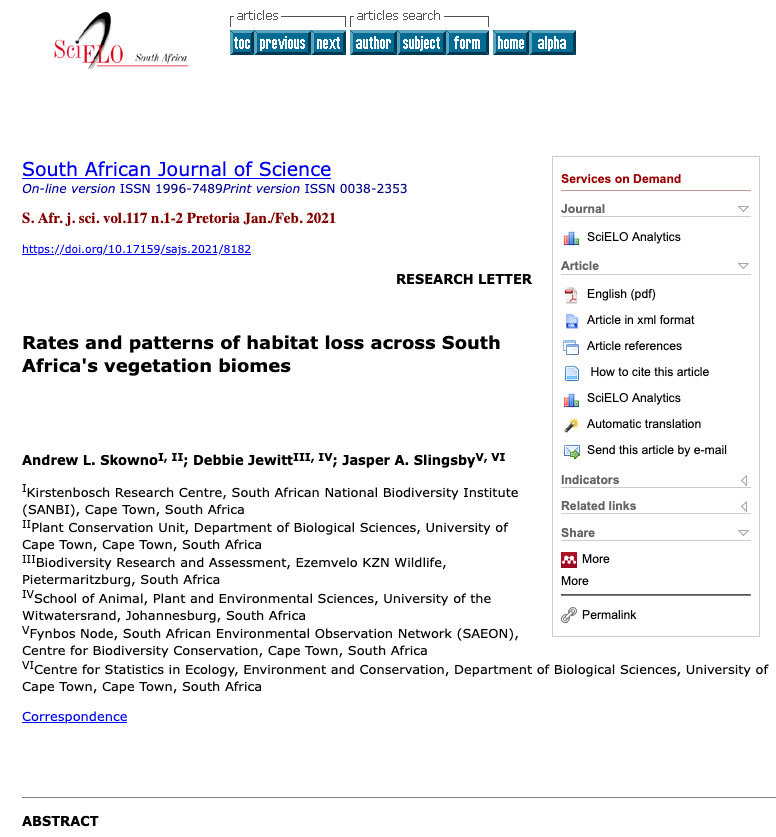
For more information on Habitat Loss see among other the above article. The effects of Habitat Loss on Biodiversity are monitored closely by the South African National Institute of Biodiversity (SANBI).
Join our mission. Volunteer, donate, advocate. Get involved today.
Plettenberg Bay Community Environmental Forum is a non-profit organisation
PBO #930023744 / 38 Hanois Crescent, Plettenberg Bay 6600, South Africa
Imprint & Disclaimer